

A key skill in art making is learning to observe and use TONE efficiently. In class we use tonal mapping exercises to develop a good eye for tone. This is where we map out areas of tone; typically 3 tones - black, white and mid-tone. This technique can then be adapted for more grey scale tones or for colour tonal studies.
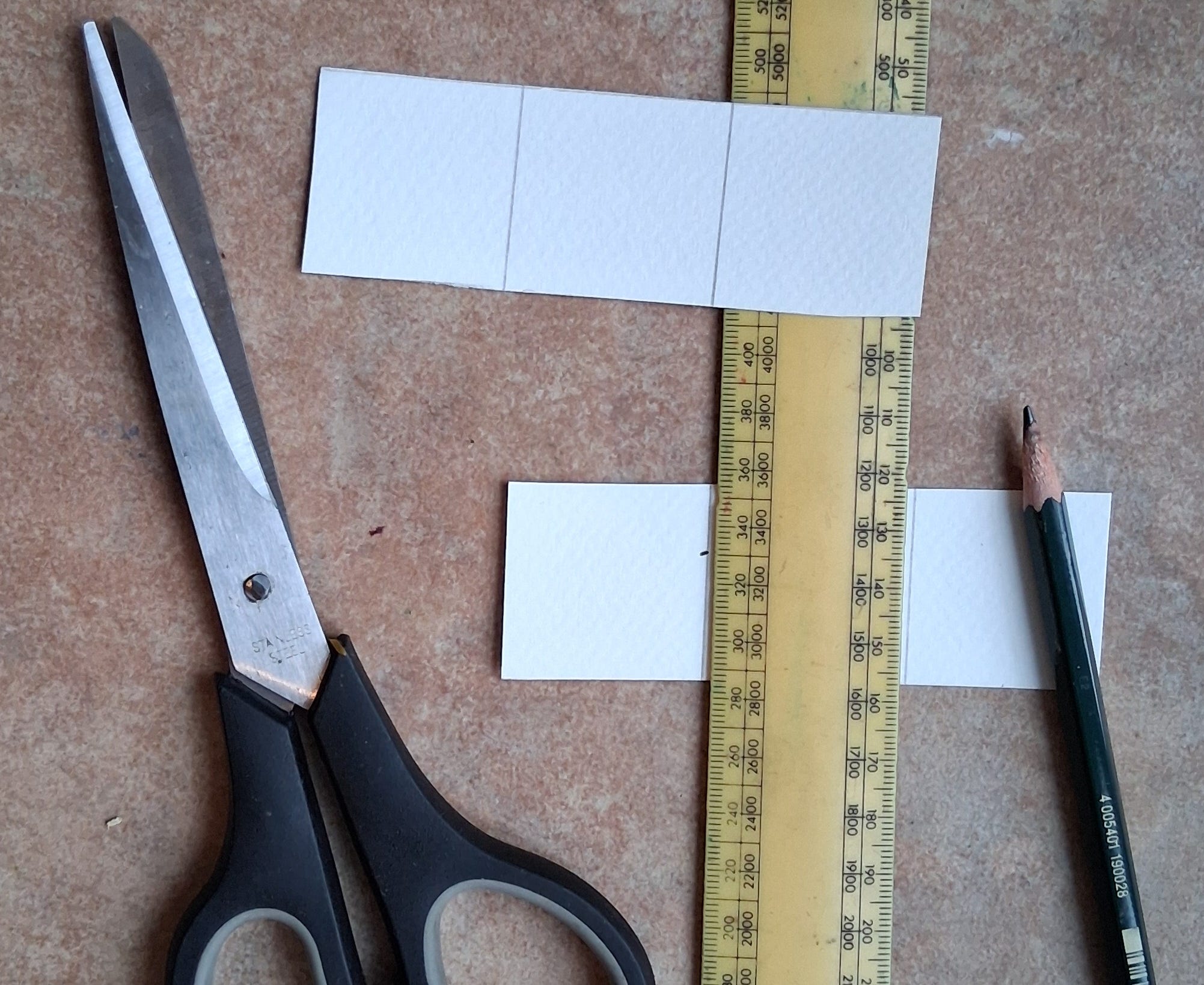
A great place to start is to create a tonal scale. To create a three tone scale you will need paper (I used watercolour paper), a pencil, ruler, black paint (I used Ivory Black gouache) and scissors.
Step 1. Take a strip of paper and divide it into 3 squares, I use the width of a ruler for the strips and divisions.
Step 2. Fill in an end square with the darkest tone you can (I used black gouache).
Step 3. Use your visual judgement to find the mid-tone for the centre square - you are aiming for the midpoint between the darkest and lightest tones.
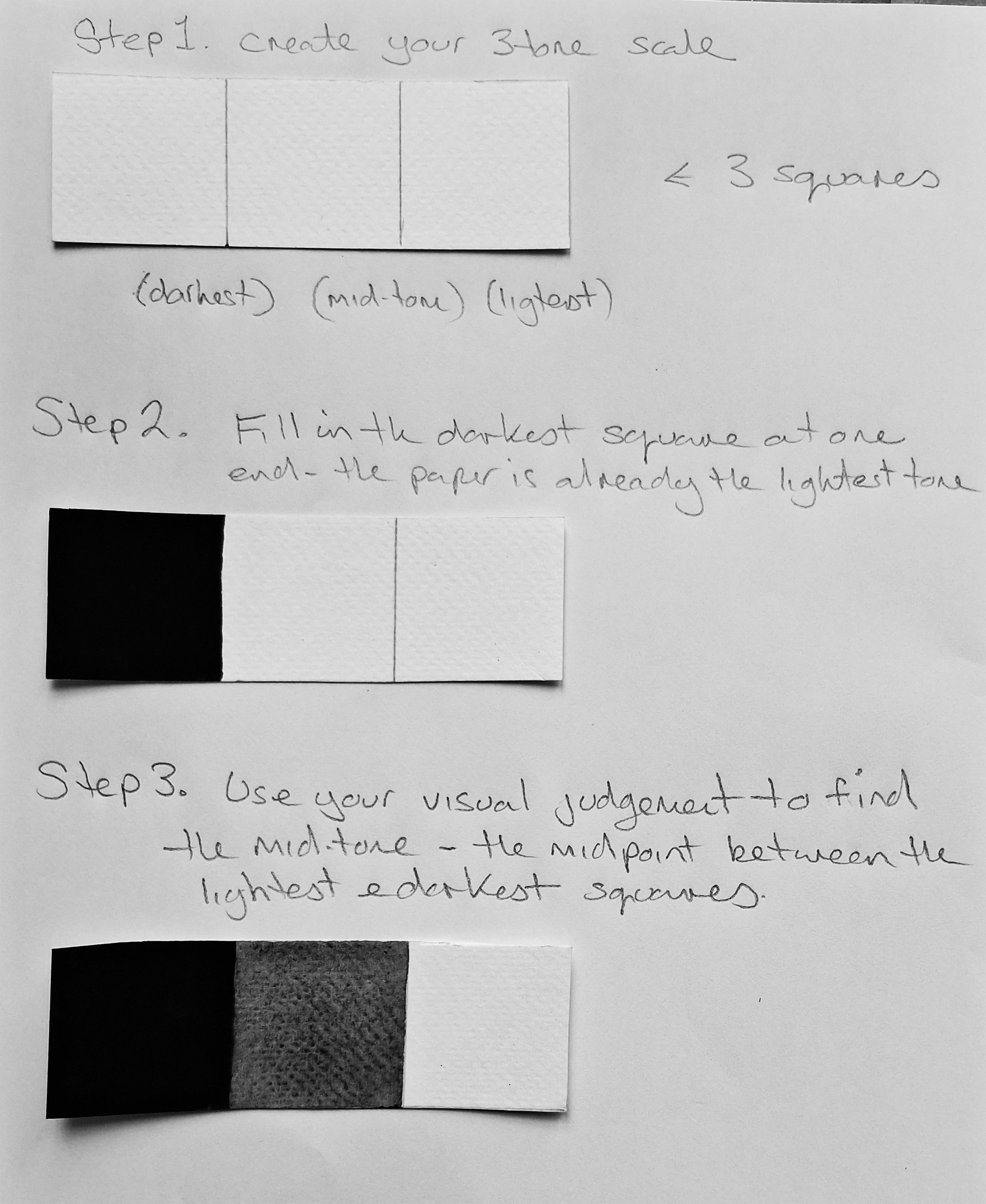
Now you have a three tone scale that you can use to help find tonal changes simply by holding it up to your subject. You could use a hole punch to make a hole in each square your subject and observe through the square of tone.
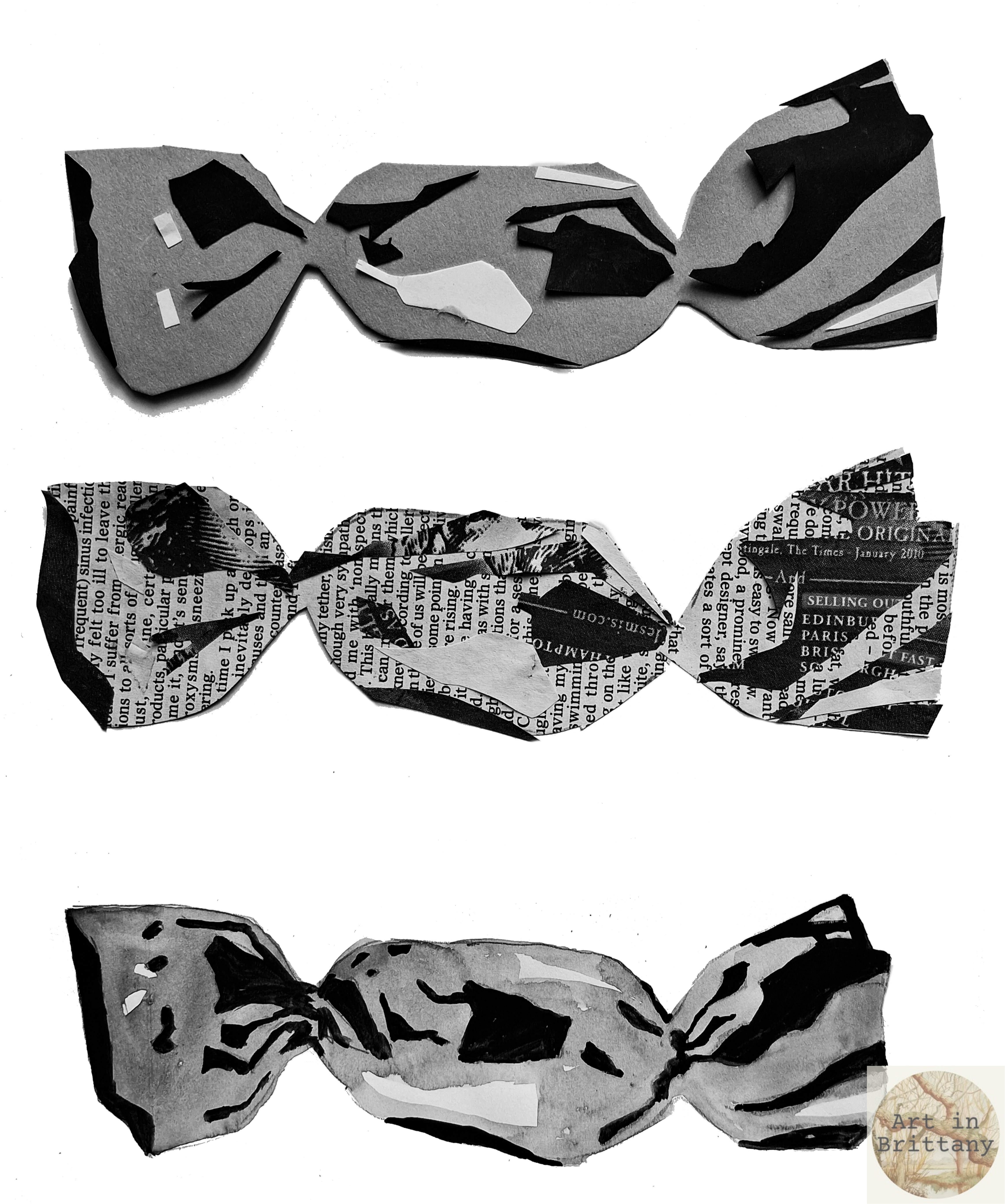
A Sweet in a Shiny Wrapper. Tonal Exercise 1.
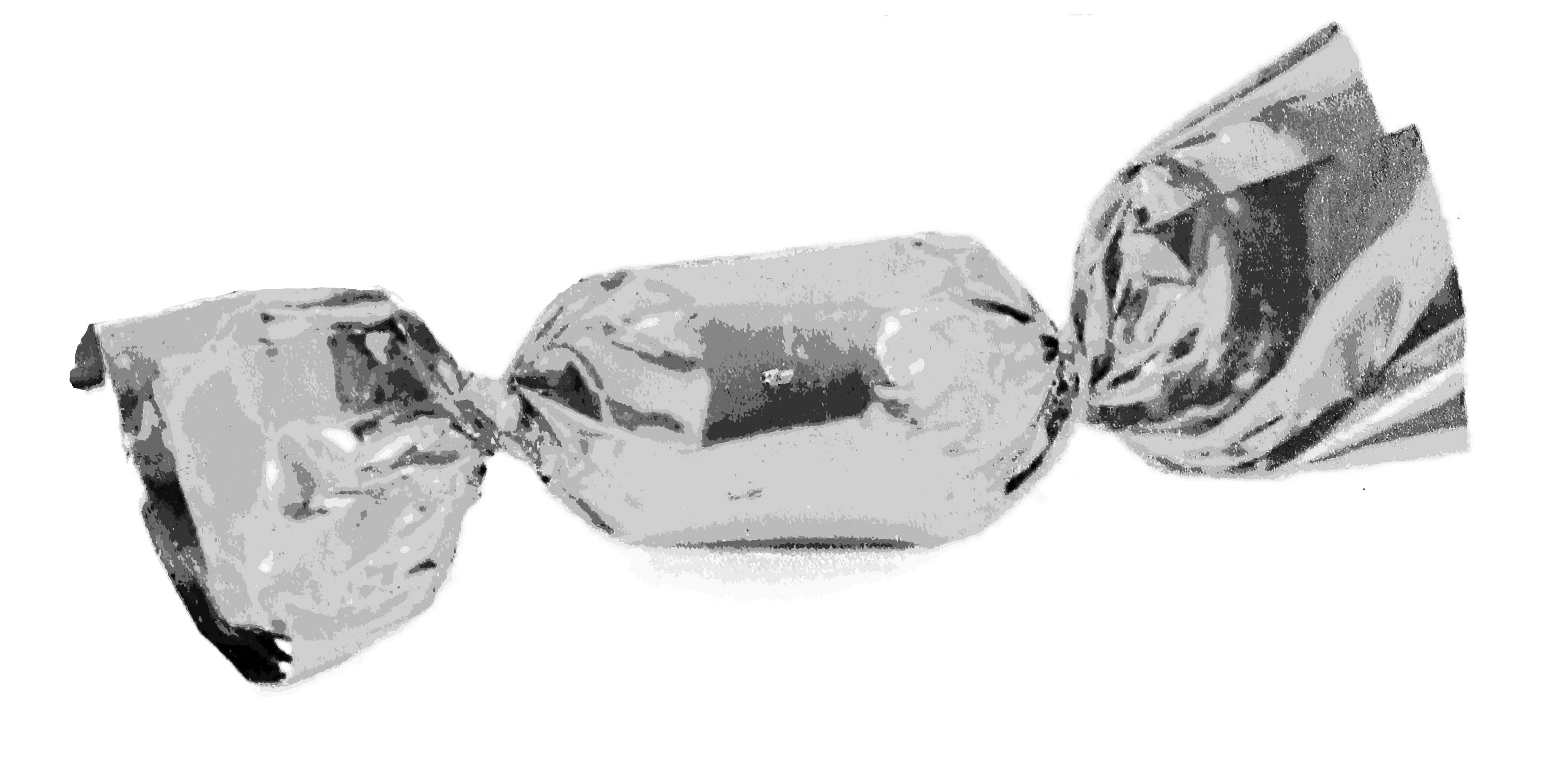
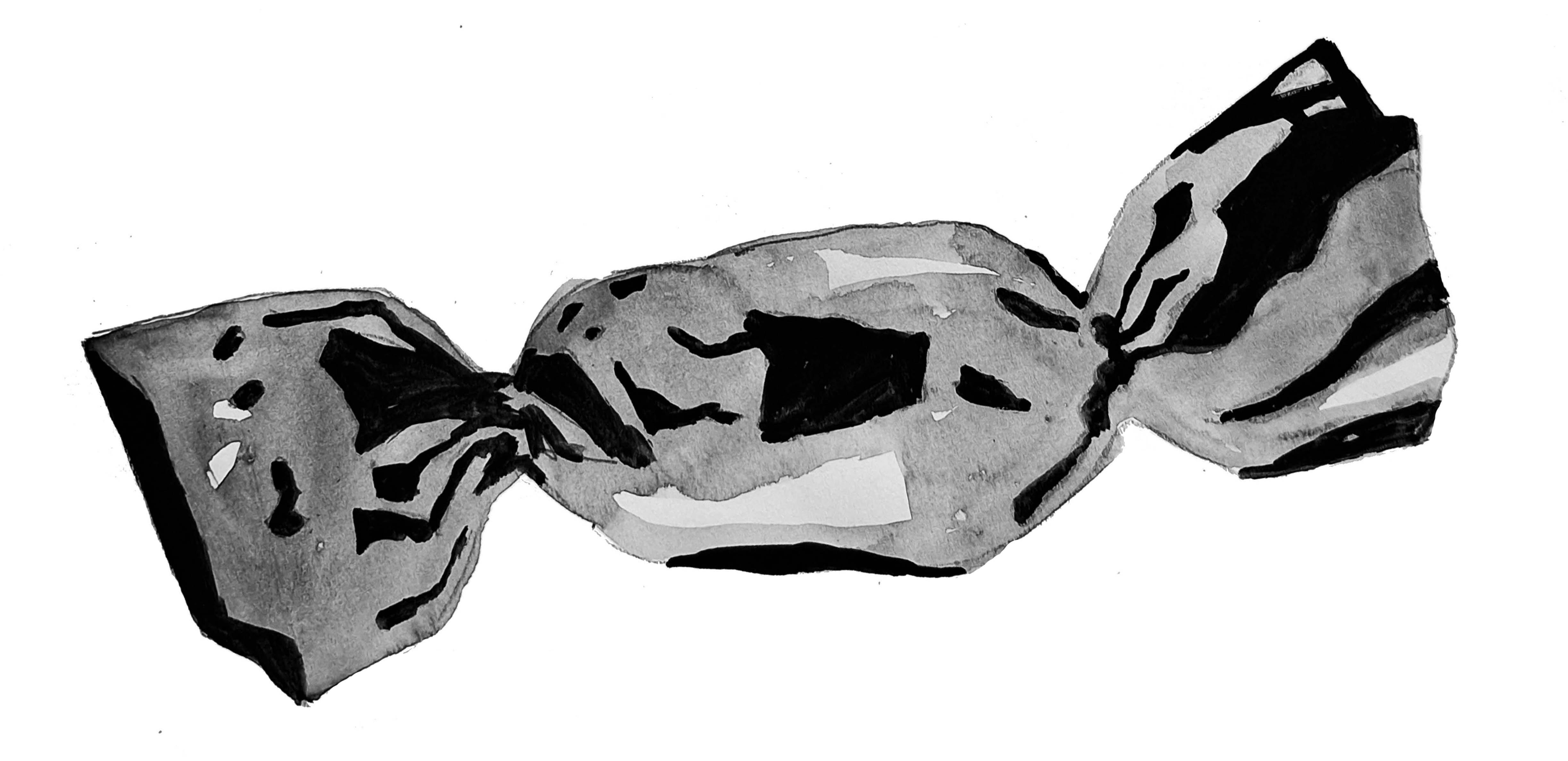
Using the reference image above, or your own image, make a study in just three tones - your scale will help you find those tones. Do simplify, you will have to ‘round up’ gradient areas to the nearest tone and do experiment with different media; in the example at the top of the article, there are three examples rendered in paint, newsprint and toned paper.
Your Face. Tonal Exercise 2.
Take a black and white photograph of yourself, or someone else, and repeat the Sweet exercise, reducing the softer gradient tones of a face to just three tones. A good approach is to find (freehand or trace) the lightest highlight areas, then the darkest which will naturally describe the mid-tone area.
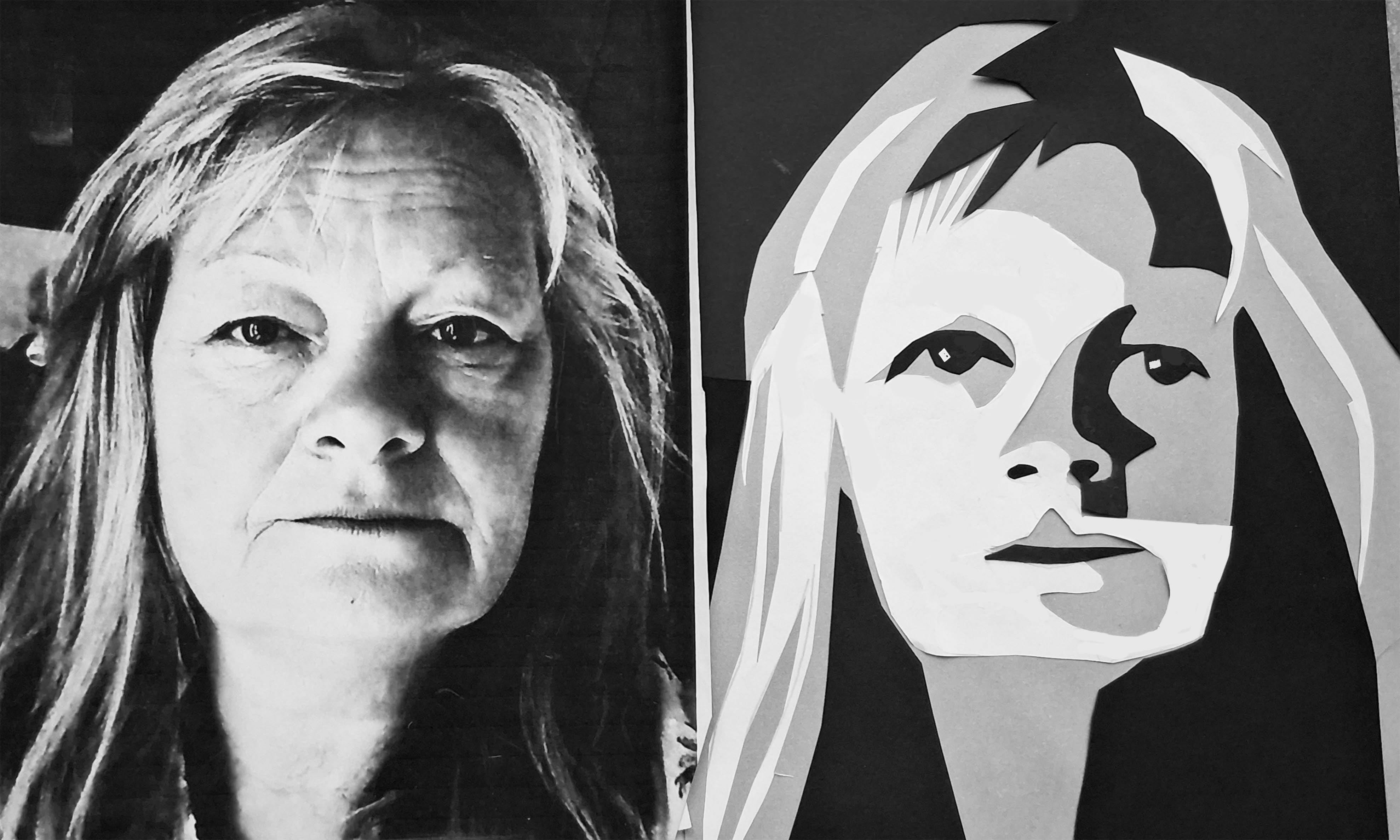
You will find that using different media changes the way you work; the limitations of each will force you to simplify.
The learning outcome is to observe the impact of tone in an image - even when simplified it will create form and dimension on the picture plane. Note how seemingly abstract shaped blocks of tone work together to suggest form. Learning to find these blocks of tone in any subject is key to producing quality art works.